
Since 2019, I’ve been researching how to advance Agile adoption in safety-critical domains, particularly how to evolve toward continuous, certifiable delivery. After exploring the feasibility of this transition in our first episode, this next stage of the journey took me into the heart of academia, examining existing publications and industry realities, and analysing post-mortem data from three real-world aerospace projects—A, D, and C.
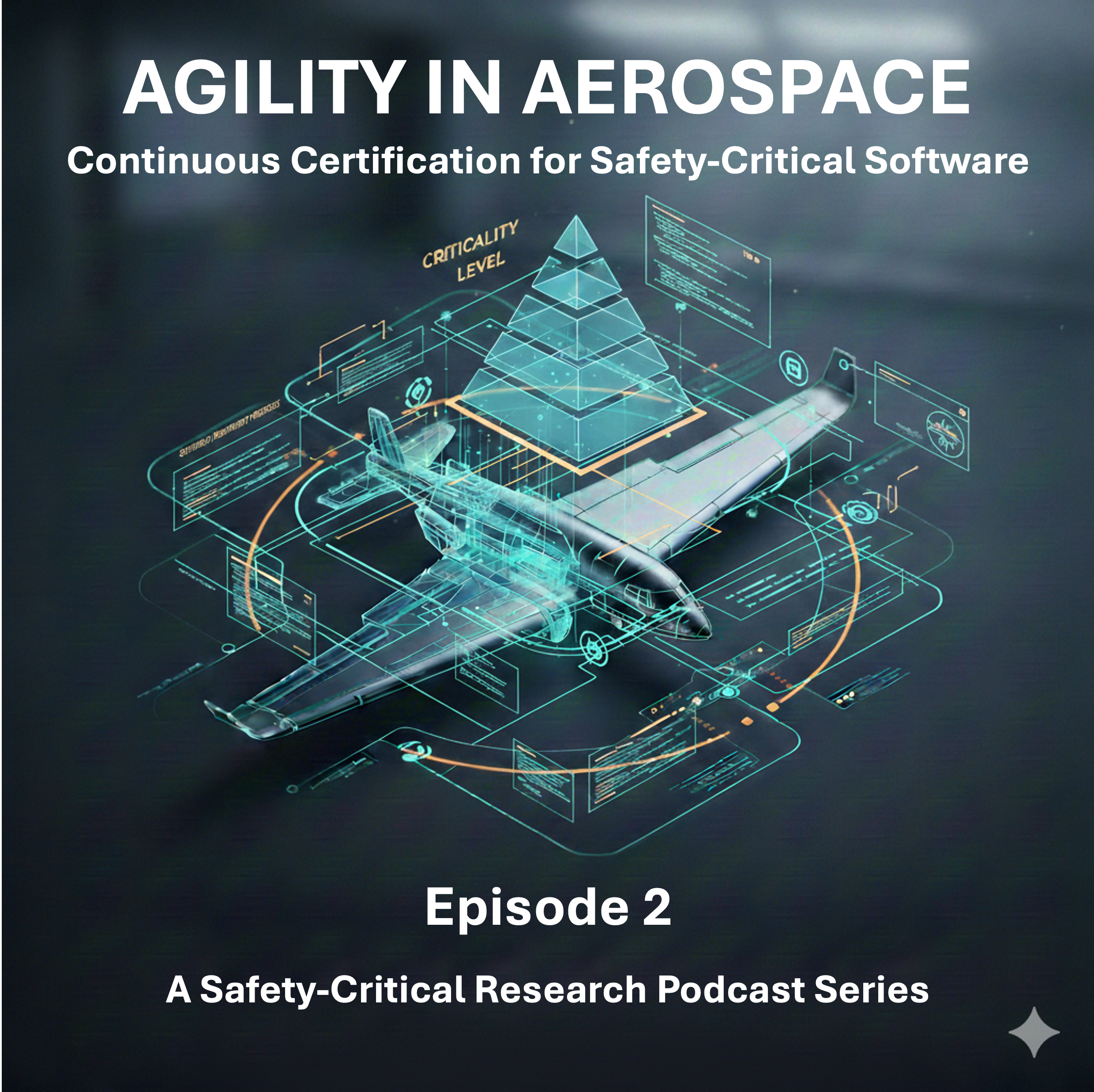
There is still so much to explore, especially when you consider that in these projects, the Verification & Validation (V&V) effort consistently exceeded the actual development effort. With the global momentum around AI, I’m continuing to use these tools to bring the data-heavy side of my research to life.
When I shared this second instalment with a colleague, his reaction was:
“This really highlights these hidden industry struggles and brings key challenges to light while showing why continued research in collaboration with industry players is essential in this area. Furthermore, with real industry data, it enriches the scientific research.”
On the other hand, my wife still insists I should be the one behind the microphone, not an AI, but as I always say, why slow down the prototyping of ideas when we have such powerful tools at our fingertips? 😉
🎙️ Episode 1 – The V&V Burden: Lessons from Academia and Industry Post-Mortems
🔊 Audio link: https://youtu.be/ApeKcPlhxZw?si=zyN9B7Y4EX79t8hv
📄 Full paper: https://ieeexplore.ieee.org/document/10497112
This episode dives into the practical findings from our Systematic Literature Mapping (SLM) and Industry Post-Mortems. We explore why current Waterfall models often lead to a “zero-change” reality in which late requirements are nearly impossible to accommodate, and how the massive volume of manual documentation creates significant bottlenecks for modern certification.
 Beyond Lean Agile